The Gut Reset Guide: What Actually Changes Your Microbiome
Gut reset programmes promise to rebalance your microbiome in a week. Here is what really shifts it, and the number most people are missing.
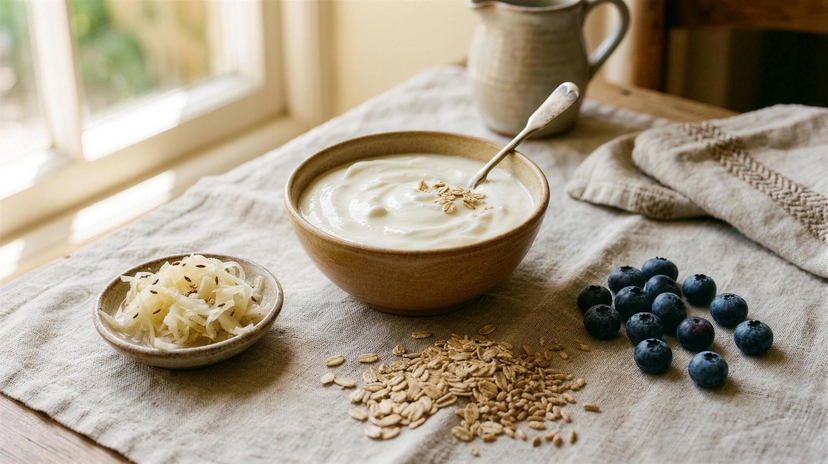
“Gut reset” programmes promise to rebalance your microbiome in a week. Your gut is more complex than that, considerably more resilient — and the thing that actually moves it is duller and better evidenced than anything in the programme.
What the gut microbiome actually is
Your large intestine is home to a vast bacterial community that helps break down what you cannot digest yourself, makes certain vitamins, and interacts constantly with your immune system. Its composition shifts with what you eat over weeks and months, and it is substantially shaped by things you cannot change this week — your early life, your geography, medication history.
That resilience is a feature. An ecosystem you could overturn in three days would be one that a bad weekend could also overturn.
Why quick resets oversell
A three-day cleanse changes what is passing through your gut. It does not meaningfully rebuild a community that took years to assemble.
Worse, the mechanism of many resets is elimination — cut food groups, cut variety, live on a short list for a week. Variety of plant fibre is the main thing that supports a varied bacterial community, so a restrictive reset can push in exactly the wrong direction while feeling like discipline.
The number the programmes never mention
Here is what actually feeds the ecosystem, and how far short most people fall.

The mean consumption of dietary fiber by American adults was only 17 g per day, about half of the recommended adequate intake level.
The recommendation is 25 g a day for women and 38 g for men — or 14 g per 1,000 kcal. Measured intake between 2017 and 2020 averaged 17 g.
So the average person is running at about half, every day, for years. Against that, a week of green juice is not a correction. It is a rounding error with a marketing budget.
Why fibre specifically
Fibre is what your gut bacteria eat. It reaches the large intestine largely intact, and the bacteria there ferment it into short-chain fatty acids — the compounds with anti-inflammatory effects that support the gut lining and metabolic health.
That is the actual mechanism behind “feed your gut”: not a supplement, but the residue of plants arriving somewhere useful. It also explains why variety matters rather than volume of one thing. Different fibres feed different organisms.
What genuinely helps
- Eat more plants, and more kinds of them. Variety of fibre supports variety of bacteria. Pulses, whole grains, nuts, seeds, fruit and vegetables all count, and mixing them counts more than perfecting any one.
- Close the fibre gap deliberately. If the average is 17 g against 25–38 g, this is the single highest-value change available, and almost nobody frames it as gut health.
- Include fermented foods — yoghurt, kefir, kimchi, sauerkraut. A reasonable addition with a plausible mechanism, though a smaller lever than the fibre gap.
- Increase gradually. Going from 17 g to 38 g overnight is uncomfortable, and discomfort is why people conclude fibre disagrees with them.
- Limit ultra-processed food and excess alcohol, and get enough sleep. Both affect the gut, and neither needs a programme.
The bottom line
You cannot reset a microbiome in three days, and the attempt often reduces the diversity you were trying to build. What you can do is close a gap that most adults have carried for years — and it is measured in grams of fibre, not days of cleanse.
References
Each source is listed against the claim it supports, so you can check the pairing rather than take the list on trust.
-
1. Supports: “Recommended fibre intake is 25 g a day for women and 38 g for men, and average adult intake measured between 2017 and 2020 was 17 g — about half. Gut bacteria ferment fibre into short-chain fatty acids, which have anti-inflammatory effects.”
The Role of Dietary Fiber in Health Promotion and Disease Prevention: A Practical Guide for Clinicians — Daley SF, Shreenath AP . StatPearls Publishing , last updated 2025-12-01.
Written by
Health journalist covering fasting, detox protocols, supplements and recovery, with a bias towards saying what the evidence does not show.