Do Detox Teas and Juice Cleanses Actually Work?
We look at what detox teas, juice cleanses and 'flushing' products actually do in your body — and what the evidence says about whether they work.
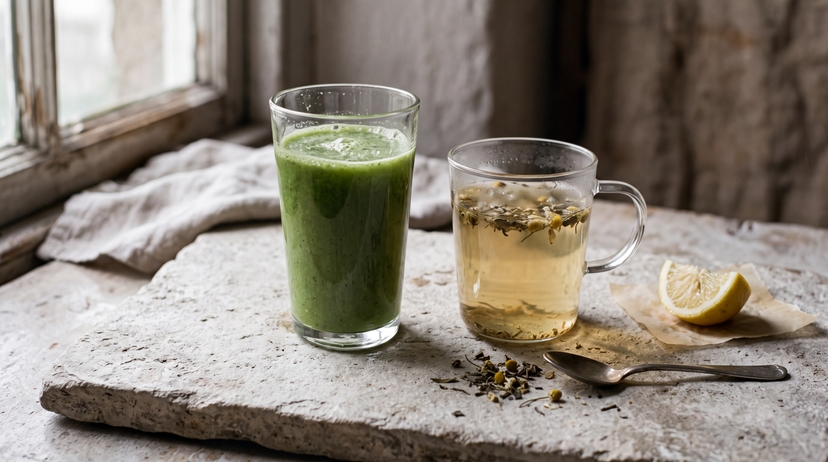
“Detox” products promise to flush toxins, reset your gut, and jump-start weight loss. The science tells a much less dramatic story — and the gap between the marketing and the evidence is unusually wide even by wellness standards.
The question worth asking first
Almost no detox product names the toxin it removes. That sounds like a pedantic objection and it is actually the whole thing: medicine does have real detoxification treatments, and they are specific. Activated charcoal is given for particular poisonings, at a particular dose, ideally within an hour of the substance being swallowed. Chelation removes named heavy metals. Each one has a substance, a mechanism and a window.
“Toxins”, unqualified, has none of those. When a product cannot say what it removes, there is no measurement that could show whether it worked.
Your body already has a detox system, and it is specific
Your liver does this in two stages. Phase I reactions use cytochrome P450 enzymes to oxidise a substance into a more water-soluble form; phase II reactions then attach it to something — glucuronate, glutathione, sulfate — so it can leave in bile or blood. It is a continuous chemical process, not a periodic clear-out.
Your kidneys filter roughly 200 litres of fluid a day. The normal filtration rate is about 120–125 ml every minute, which is running right now, and has been all week.
Neither organ is waiting for a tea.

No randomised controlled trials have been conducted to assess the effectiveness of commercial detox diets in humans.
What the evidence actually says
The most-cited review of the field looked for clinical evidence behind commercial detox diets and found “very little”. Its blunter finding is the one worth carrying: no randomised controlled trials have been conducted to assess whether commercial detox diets work in humans. Not trials that failed — trials that have not been done.
A handful of small studies have suggested that specific foods might influence how the body handles specific pollutants, but they are mostly animal studies, and the review describes the human work as hampered by flawed methods and small samples.
What detox teas actually do
Most detox teas contain laxative herbs — senna is the common one — or diuretic ingredients. What you are likely experiencing is:
- Water weight loss from fluid shifts, not fat loss. It returns when you rehydrate.
- More frequent bowel movements, from the laxative effect.
- Temporary bloating relief, which reverses once you stop.
None of this is the same as removing a toxin. The scales moving is real; what moved is mostly water and gut contents.
The real risks
Regular use of laxative-based teas can cause dehydration and electrolyte disturbance, and with long-term use the bowel can become reliant on the stimulant for normal movement. Extended juice cleanses can cause fatigue and blood sugar instability, and are a genuinely bad idea if you manage diabetes with medication.
There is also an opportunity cost. A week spent on a cleanse is a week not spent on the things that do have evidence behind them.
What actually supports your body’s detox systems
- Staying hydrated, so your kidneys have something to work with
- Eating fibre-rich whole foods
- Limiting alcohol, which your liver processes ahead of almost everything else
- Getting consistent sleep
- Moderate exercise
None of this is as exciting as a three-day cleanse. It is what the evidence supports, and your liver and kidneys were always going to do the actual work.
References
Each source is listed against the claim it supports, so you can check the pairing rather than take the list on trust.
-
1. Supports: “There is very little clinical evidence supporting commercial detox diets, and no randomised controlled trials of them have been conducted in humans.”
Detox diets for toxin elimination and weight management: a critical review of the evidence — Klein AV, Kiat H . Journal of Human Nutrition and Dietetics, 2015 .
-
2. Supports: “The liver already converts substances for excretion in two stages — phase I oxidation via cytochrome P450 enzymes, then phase II conjugation.”
Physiology, Liver — Kalra A, Yetiskul E, Wehrle CJ, Tuma F . StatPearls Publishing , last updated 2023-05-01.
-
3. Supports: “The kidneys filter roughly 200 litres of fluid a day, with a normal glomerular filtration rate of 120–125 ml per minute.”
Physiology, Renal — Ogobuiro I, Tuma F . StatPearls Publishing , last updated 2023-07-24.
Written by
Health journalist covering fasting, detox protocols, supplements and recovery, with a bias towards saying what the evidence does not show.