The 5:2 Diet Explained: Does Part-Time Fasting Work?
Five normal days, two restricted ones. Here is what the trials actually found when 5:2-style fasting was compared head to head with ordinary dieting.
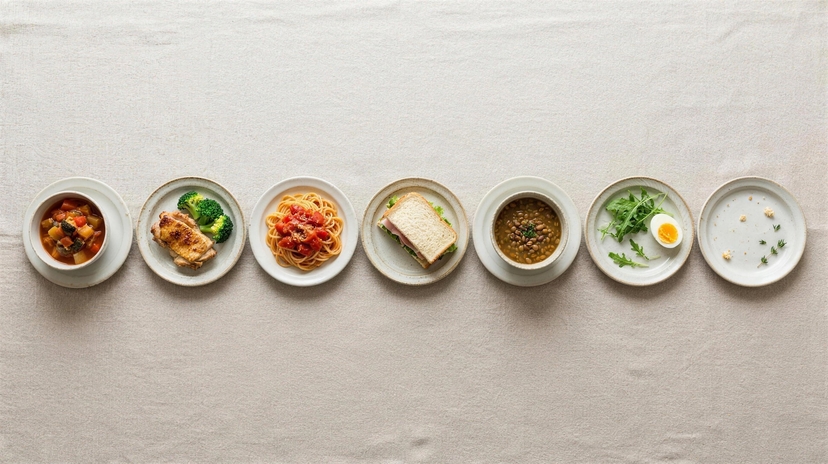
The 5:2 diet is a form of intermittent fasting: you eat normally for five days a week and restrict to around 500–600 calories on the other two. It has been one of the most popular diets of the last decade, and it has been tested properly — which makes it one of the few places in this field where we can say something firm.
What the trials found
A systematic review pooled 11 randomised controlled trials comparing intermittent energy restriction with ordinary, continuous restriction — the everyday “eat a bit less each day” approach.

Both intermittent and continuous energy restriction achieved a comparable effect in promoting weight-loss and metabolic improvements.
Comparable. Not better, not worse.
That result is genuinely useful, and it is worth being clear about why it is not a criticism of 5:2. It means the choice between “restrict two days hard” and “restrict every day gently” is a question about you, not about metabolism. Both routes arrive at the same place. The only thing that separates them is which one you will still be doing in six months.
The same review noted the honest limitation: most of these trials ran 8 to 24 weeks. Longer evidence remains thin, which is true of nearly every diet.
Who 5:2 tends to suit
- People who find all-day restraint exhausting but can manage two hard days.
- People who like a rule they can keep without counting anything the rest of the week.
- People whose weeks are irregular enough that a daily target keeps failing.
Who tends to struggle with it
- Anyone who compensates. The commonest failure is not the fasting day — it is the day after, eaten as a reward. Two 500-calorie days create a weekly deficit that one large overcompensation erases.
- People who need steady fuel across the day for work or training.
- Anyone with a history of disordered eating. A pattern of restriction followed by permission is a difficult shape, and this one is built from it.
Making it work
- Keep fasting-day meals high in protein and fibre. 500 calories of eggs, pulses and vegetables is a meal. 500 calories of biscuits is a rehearsal for dinner.
- Do not schedule fasting days around hard training or big social meals. The pattern survives on being convenient.
- Watch the normal five days. 5:2 is not a licence, and the weekly maths is unforgiving.
- Separate the two fasting days. Back to back is a different, harder diet.
The bottom line
5:2 works about as well as any other way of eating less, which the evidence says clearly. So the real question is not whether it is superior — it is whether a hard Monday and Thursday suit you better than a slightly smaller dinner every night.
It is not suitable if you are pregnant or breastfeeding, underweight, or have a history of disordered eating, and it needs a conversation with your doctor if you take medication for diabetes.
References
Each source is listed against the claim it supports, so you can check the pairing rather than take the list on trust.
-
1. Supports: “Across 11 randomised controlled trials, intermittent and continuous energy restriction produced comparable weight loss and metabolic improvements — neither was superior.”
Intermittent versus continuous energy restriction on weight loss and cardiometabolic outcomes: a systematic review and meta-analysis of randomized controlled trials — Cioffi I, Evangelista A, Ponzo V, Ciccone G, Soldati L, Santarpia L, Contaldo F, Pasanisi F, Ghigo E, Bo S . Journal of Translational Medicine, 2018 .
Written by
Health journalist covering fasting, detox protocols, supplements and recovery, with a bias towards saying what the evidence does not show.