Does Activated Charcoal Actually Detox You?
Activated charcoal is a real emergency treatment with a one-hour window. Almost everything the wellness industry does with it happens outside that window.
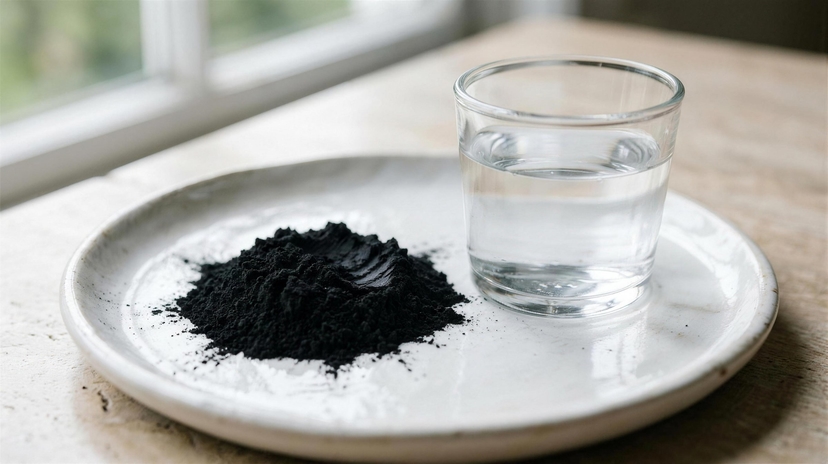
Activated charcoal has an unusual place in wellness: it is one of the few “detox” ingredients with a genuine, serious, hospital-grade use. That is exactly why the marketing works — and why it misleads.
What it actually does, and when
Activated charcoal is porous carbon with an enormous internal surface area. Substances adhere to that surface — adsorption, not absorption — so anything bound to charcoal in your gut passes through instead of crossing into your blood.
In poisoning, it is given within 1 hour of ingestion, with later use reserved for selected cases involving delayed absorption. That one-hour window is the whole thing. It is not a property of charcoal that fades slowly; it is the point at which the substance has already left the gut, after which there is nothing left in there to bind.
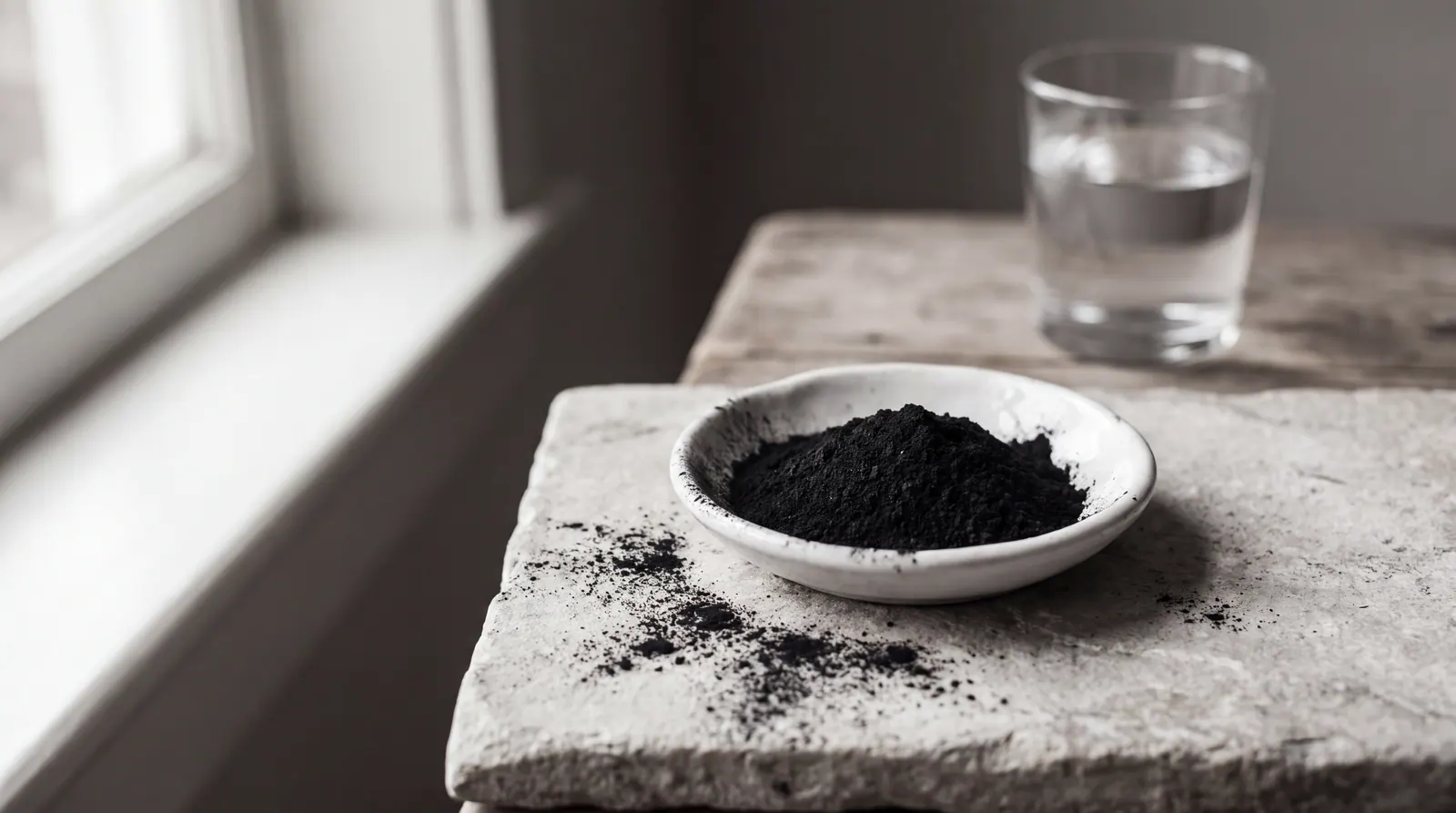
Activated charcoal does not effectively adsorb alcohols, metals such as iron and lithium, electrolytes such as magnesium, potassium, or sodium, and acids or alkalis.
The list of things it does not bind
This is the part the wellness version never prints, and it dismantles most of the claims on its own.
Charcoal does not effectively adsorb alcohols — so the hangover product is inert against the thing it names. It does not adsorb metals such as iron and lithium, so it is useless for the heavy-metal detoxing it is often sold for. It does not adsorb electrolytes, nor acids or alkalis.
Alcohol and heavy metals are two of the three things people buy charcoal to remove. It binds neither.
Why routine use is worse than pointless
Charcoal binds indiscriminately. It cannot distinguish a poison from your medication, and it may reduce the absorption and therapeutic effect of coadministered medications.
That is not a theoretical concern. If you take a contraceptive pill, a thyroid replacement, an antidepressant, an anticoagulant or an antiepileptic, a daily charcoal habit is a daily gamble on how much of your dose actually arrives.
There is a physical risk too, which is easy to miss because it belongs to the medical setting where charcoal is used properly. Aspiration is among its most concerning risks and can lead to severe respiratory compromise and even death. That risk is managed in hospital by people watching for it.
What “detox” means in the two contexts
In toxicology, detoxification means stopping a specific identified poison from being absorbed, inside a known time window, under supervision. In marketing, it means removing unspecified accumulated impurities from a healthy body over an indefinite period.
Charcoal is excellent at the first and has no mechanism for the second. Anything already absorbed — anything in your blood, liver or fat — is not in the gut, and charcoal only ever works in the gut.
The bottom line
Activated charcoal is a real drug with a real indication, a one-hour window and a documented list of things it cannot touch, including the alcohol and the heavy metals it is most often sold to remove. Taken casually it does nothing useful; taken alongside medication it can quietly reduce your dose. Respect it in an emergency department, and be sceptical of it in a smoothie.
References
Each source is listed against the claim it supports, so you can check the pairing rather than take the list on trust.
-
1. Supports: “Activated charcoal is administered within 1 hour of ingestion; it does not adsorb alcohols, metals such as iron and lithium, electrolytes such as magnesium, potassium or sodium, or acids and alkalis; aspiration is among its most concerning risks and can be fatal; and it may reduce the absorption and therapeutic effect of coadministered medications.”
Activated Charcoal — Taylor A, Galuska MA, Patel P . StatPearls Publishing , last updated 2026-04-18.
Written by
Health journalist covering fasting, detox protocols, supplements and recovery, with a bias towards saying what the evidence does not show.