Do Probiotics Actually Work? An Honest Look
There is a real, quantified benefit for antibiotic-associated diarrhoea. Almost everything else on the label is a promise about a different strain.

Probiotics are sold on a general premise — good bacteria, better gut — and studied as specific ones. That mismatch explains almost everything confusing about the category, including why the evidence looks strong and weak at the same time depending on which page you read.
The finding that holds up
Antibiotic-associated diarrhoea is the clearest win, and it comes with numbers. A 2017 review of 17 studies covering 3,631 participants who were not hospitalised found that giving probiotics alongside antibiotics was associated with a decrease of about half in the likelihood of developing it.
That is a large effect on a common, miserable and entirely predictable problem. It is also mechanistically sensible: antibiotics disturb the resident population, and you are replacing some of what is being cleared while it is being cleared.
If you are prescribed antibiotics and prone to this, it is the one situation where reaching for a probiotic is straightforwardly supported.
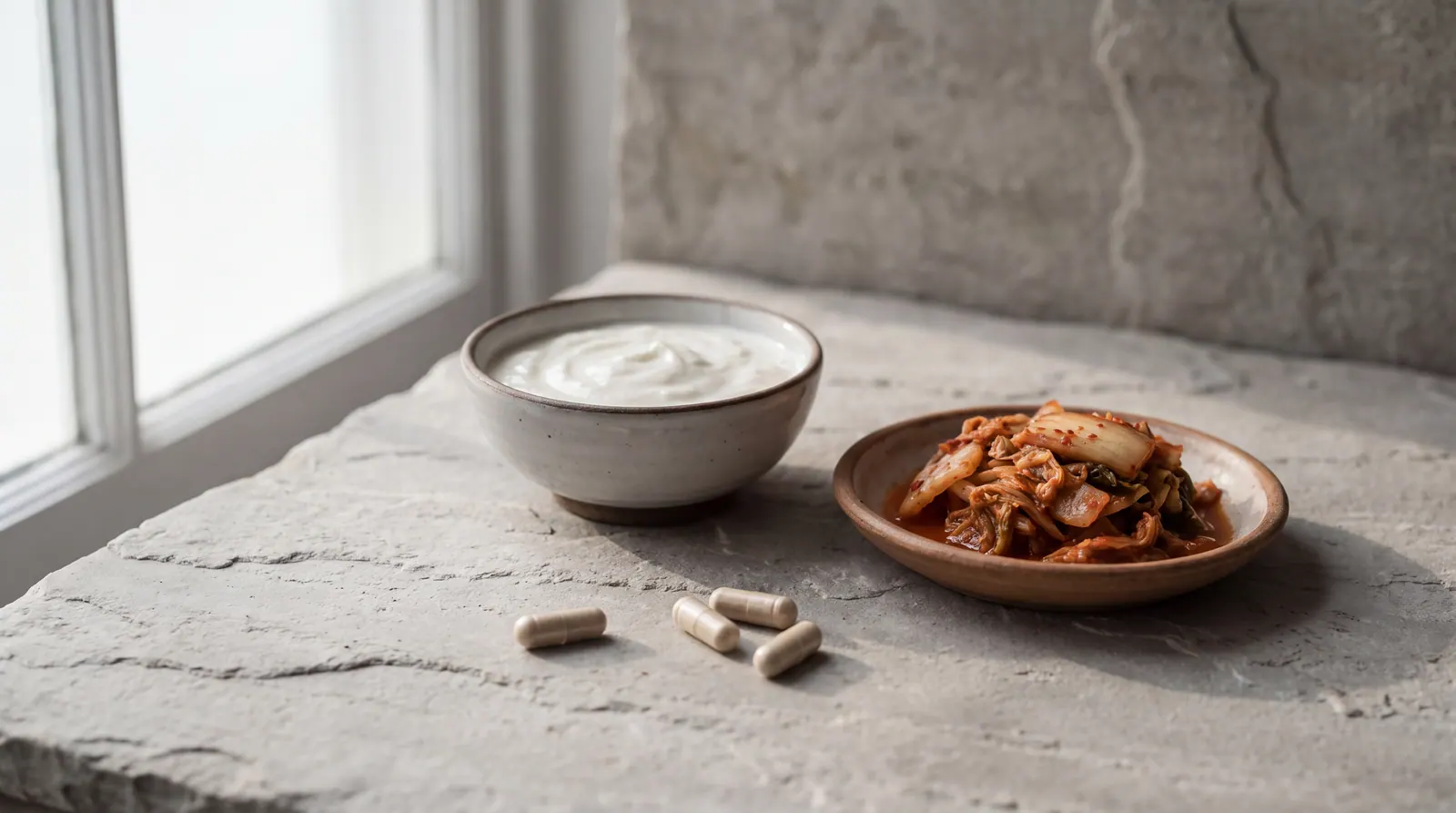
If a specific kind of Lactobacillus helps prevent an illness, that doesn't necessarily mean that another kind of Lactobacillus or any of the Bifidobacterium probiotics would do the same thing.
Why the shelf is harder to read than it looks
Effects are specific to the type used. A benefit demonstrated for one kind of Lactobacillus does not carry to another Lactobacillus, let alone to a Bifidobacterium.
Follow that through and most of how people shop stops working:
- A “clinically proven” claim may be true of a strain the product in your hand does not contain.
- CFU counts are not a quality ranking. Fifty billion of something untested is not better than five billion of something tested for your specific problem.
- More strains is not better. A blend of twelve is twelve small doses of mostly unstudied organisms, not twelve chances of working.
- Two products with the same species on the front can be entirely different interventions.
This is the honest reason this category resists a “best probiotic” recommendation. The question is always for what, and the answer is a strain name, not a brand.
Where the evidence thins out
For general “gut health”, immunity, mood or weight loss in an otherwise healthy person, the picture is far weaker than the shelf implies. Some conditions — irritable bowel syndrome is the common one — have promising but strain-dependent results, which means a product that helped somebody else may do nothing for you.
Note what “the evidence is weak” means here. It does not mean probiotics have been shown not to work. It means most of these claims have not been tested with the specific organism in the specific product, and a claim that has not been tested is not a claim that failed. That is less satisfying than a verdict, and it is what is actually true.
Safety, which is usually skipped
Probiotics have an extensive history of apparently safe use, particularly in healthy people. But the risk of harmful effects is greater in people with severe illnesses or compromised immune systems, and for high-risk individuals such as premature infants or seriously ill hospital patients the potential risks need weighing carefully against the benefits.
If you are immunocompromised, on chemotherapy, have a central line, or are seriously unwell, introducing live organisms is a medical decision rather than a wellness one.
The food-first option
Yoghurt, kefir, kimchi, sauerkraut and miso deliver live cultures at a fraction of the cost, alongside food rather than instead of it. The evidence for specific strains does not transfer to them either — but neither does the price tag, and the failure mode of eating more yoghurt is that nothing happens.
The bottom line
Take a probiotic alongside antibiotics if you are prone to the diarrhoea that follows; the evidence there is good and quantified. Beyond that, match a named strain to a named goal or accept that you are experimenting. Ignore CFU counts and strain counts, and treat “supports gut health” as the empty phrase it is.
References
Each source is listed against the claim it supports, so you can check the pairing rather than take the list on trust.
-
1. Supports: “Probiotic effects are specific to the type used, so a result for one Lactobacillus does not transfer to another or to Bifidobacterium; a 2017 review of 17 studies with 3,631 non-hospitalised participants found probiotics given alongside antibiotics were associated with about half the likelihood of antibiotic-associated diarrhoea; and the risk of harm is greater in people with severe illness or compromised immune systems.”
Probiotics: What You Need To Know . National Center for Complementary and Integrative Health (NIH) .
Written by
Health journalist covering fasting, detox protocols, supplements and recovery, with a bias towards saying what the evidence does not show.