Vitamin D: Who Actually Needs a Supplement?
The UK advice has specific numbers behind it — 10 micrograms a day in autumn and winter, all year for some groups, and a hard ceiling of 100.

Vitamin D is one of the few supplements with genuinely mainstream backing, which makes it worth getting the specifics right rather than nodding along. The UK advice is precise, and most of the confusion around it comes from articles that summarise it as “a modest daily dose”.
The number is 10 micrograms
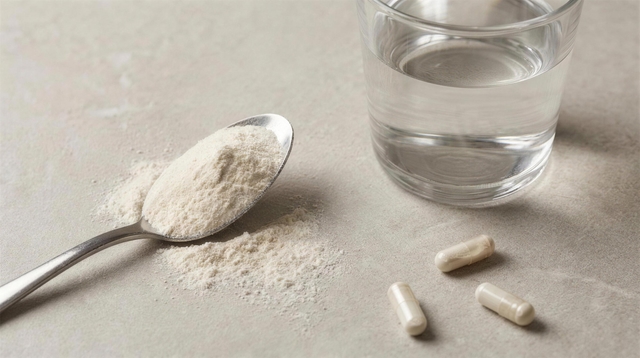
The NHS position: everyone, including pregnant and breastfeeding women, should consider taking a daily supplement containing 10 micrograms of vitamin D during the autumn and winter.
The reasoning is latitude. Your skin makes vitamin D from UVB in sunlight, and between roughly October and March the sun in the UK does not get high enough in the sky to supply much of it, whatever the weather does. This is not a claim that British winters are gloomy; it is a fact about the angle of the sun.

Everyone (including pregnant and breastfeeding women) should consider taking a daily supplement containing 10 micrograms of vitamin D during the autumn and winter.
Who should take it all year round
Some people cannot rely on summer to make up the difference, and for them the advice is not seasonal. Adults and children over 4 are advised to take 10 micrograms daily throughout the year if they:
- are not often outdoors
- live in an institution such as a care home
- usually wear clothes that cover most of their skin when outdoors
People from a dark-skinned background — including African, African-Caribbean and South Asian backgrounds — are also advised to consider a daily supplement all year, because more melanin means less vitamin D produced from the same exposure.
Two of those criteria are about circumstance rather than health, and they are the ones most often missed. Office work through daylight hours and a commute at either end is “not often outdoors” in practice, whatever your calendar says about summer.
The ceiling, which is where more-is-better fails
Do not take more than 100 micrograms (4,000 IU) a day, as it could be harmful. That limit applies to adults, including pregnant and breastfeeding women and older people, and to children aged 11 to 17.
Vitamin D is fat-soluble, so a surplus is stored rather than excreted, and it accumulates over months. Sustained excess raises blood calcium, which can damage the kidneys and heart. Note the size of the gap: the advised dose is 10 micrograms and the ceiling is 100, so the high-strength products sold at 75 or 125 micrograms are not a stronger version of the guidance — one of them is already over the line.
What food realistically contributes
Oily fish, red meat, egg yolks and fortified spreads and cereals all contain some. In practice they will not close a winter gap on their own, which is precisely why the supplement advice exists rather than a “just eat more salmon” recommendation.
When to ask rather than assume
You do not need a blood test to take 10 micrograms; that dose is advised without one. It is worth a conversation with a doctor if you have a condition affecting fat absorption such as coeliac disease or Crohn’s, if you have had bariatric surgery, if you take medication for epilepsy or steroids, or if you have a kidney or parathyroid condition — in the last case supplementing without advice can be actively unsafe.
The bottom line
Ten micrograms a day from October to March for almost everyone; all year if you are indoors most of the time, cover up, live in a care setting or have dark skin; and never more than 100 micrograms without medical supervision. It is one of the few supplements where the sensible answer is a specific number rather than a shrug — so use the number.
References
Each source is listed against the claim it supports, so you can check the pairing rather than take the list on trust.
-
1. Supports: “Everyone should consider a daily supplement containing 10 micrograms of vitamin D during the autumn and winter; those rarely outdoors, in an institution such as a care home, who cover most of their skin, or who have dark skin should take it throughout the year; and no one should take more than 100 micrograms (4,000 IU) a day.”
Vitamin D . NHS .
Written by
Health journalist covering fasting, detox protocols, supplements and recovery, with a bias towards saying what the evidence does not show.